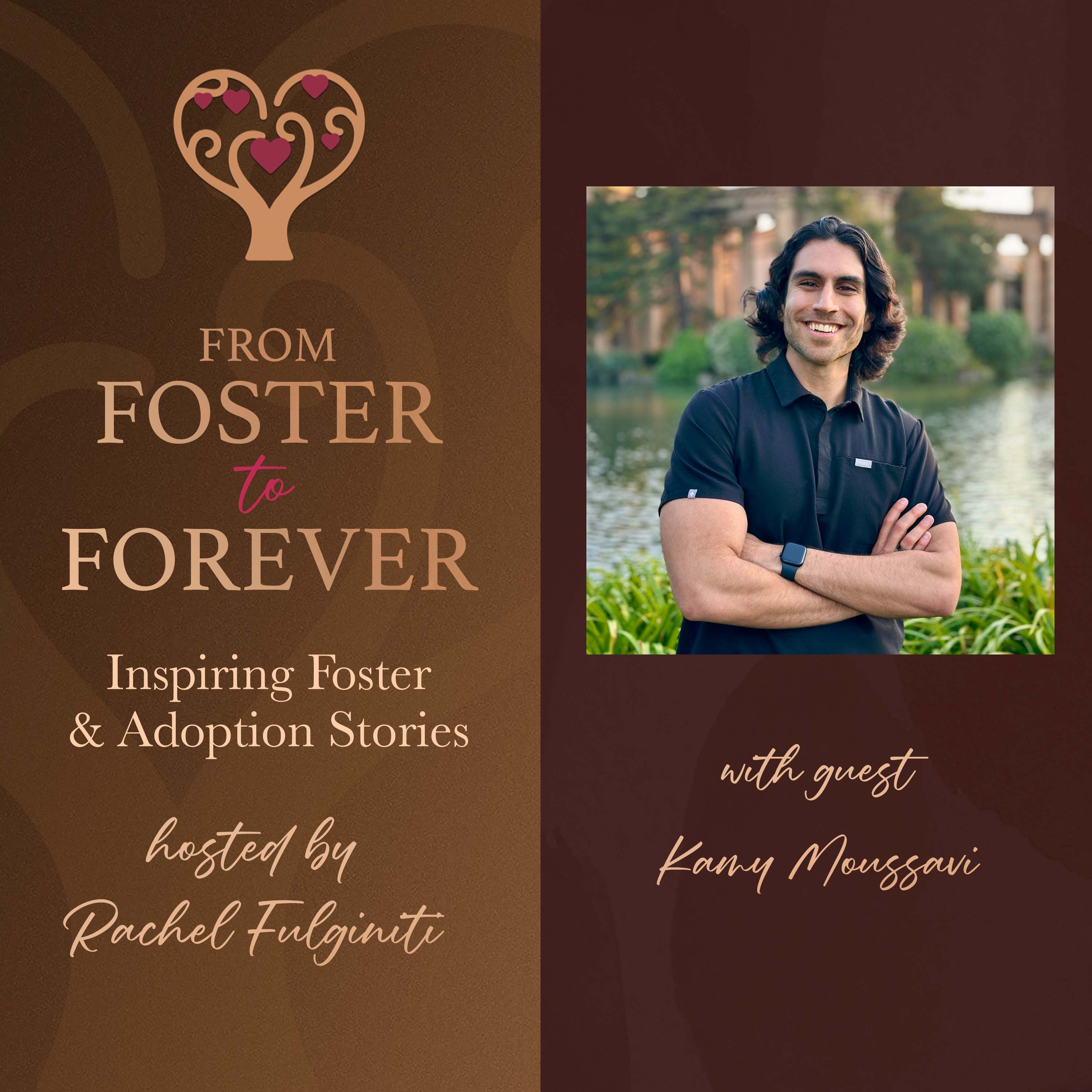
Why Foster Kids Struggle with Food, ADHD & Addiction (Root Causes with Kamy Moussavi)

 Apple Podcasts
 Spotify
 Podcast Addict
 PocketCasts
 Castbox
 Castro
 Why do so many children—especially those in foster care or adoption—struggle with food, weight, and self-regulation?
In this episode of From Foster to Forever, Rachel sits down with Kami Moussavi, founder of Step Together, to uncover the real root causes behind childhood eating issues, ADHD, and addictive behaviors.
This conversation goes far beyond diet and discipline. Together, they explore how trauma, emotional suppression, and dopamine shape a child’s relationship with food, screens, and self-worth.
Rachel also shares her own powerful story of childhood trauma, emotional neglect, and disordered eating—making this one of the most personal episodes yet.
💡 What You’ll Learn
- Why food issues in kids are often symptoms—not the root problem
- How trauma, grief, and emotional suppression show up as eating behaviors
- The connection between ADHD, dopamine, and addiction (food, screens, etc.)
- Why foster and adopted children may be especially vulnerable
- The surprising truth: it’s not about fixing the child—it’s about supporting the parent
- How to recognize when a child’s behavior has crossed into addiction
- Why removing “problem foods” too quickly can backfire
- The 5 healthy sources of dopamine every child needs
- Simple, practical ways to shift your home environment to support healthier habits
🔑 In This Episode
- The link between foster care, trauma, and food addiction
- How ADHD and dopamine drive eating and screen habits
- Why traditional weight loss advice doesn’t work for kids
- The role of emotional suppression in childhood behavior
- What parents can do to support lasting change
❤️ Key Takeaways
- “The root cause is often emotional pain—not lack of willpower.”
- Children use food, screens, and other behaviors to cope with feelings they don’t know how to process
- Parents don’t need to be perfect—but they do need to become safe emotional spaces
- Lasting change happens when families address environment, emotions, and connection—not just behavior
Links referenced in this episode:
00:00 - Untitled
00:16 - Understanding the Impact of Family Dynamics
01:08 - Understanding the Root Causes of Childhood Weight Issues
17:48 - Understanding ADHD and Its Impact on Children
21:03 - born addicted
30:09 - Understanding Emotional Support in Parenting
35:00 - Dealing with Emotional Challenges in Foster Care
40:47 - 5 healthy sources of dopamine
Going essentially into a new family, there's a lot of pain. And that pain sometimes leads to addictions. Sometimes it leads to different attachment styles. Sometimes it leads to just using food as a suppressant.
Rachel FulginitiIt's the Foster to Forever podcast. Happy stories of non traditional families born through Foster to Adopt. I'm your host, Rachel Fulgenetti.I am really, really excited to introduce Kami Mousavi. He is the founder of Step Together, which is an organization that specializes in children's weight loss by addressing the root cause. Kami, welcome.
Kamy MoussaviThank you, Rachel.
Rachel FulginitiA lot of children in general struggle with weight, but I know there's a lot of children who are in foster care or who have been in foster care that really struggle with food issues and eating healthy and all of that kind of stuff. So I'm excited to dig in. Want to talk first about this idea of the root cause. Can you give our listeners just a sense of what you mean by that?
Kamy MoussaviSo very simply, when we look at someone who has excess weight, we're thinking it's a very simple equation. You eat more calories than you burn, you gain weight. And my background is in engineering, so that kind of equation is really soothing for my brain.It's like, yeah, okay, it's a simple thermodynamic equation. We can solve it. And so myself personally as a kid, I. I had excess weight issues for the majority of my life and still did as an adult.And every time I tried to fix my weight by just trying to fix my diet or my exercise, and my mom tried everything.When I was growing up, these weight loss programs like Weight Watchers, Jenny Craig, nothing really worked because everything was addressing the symptom, which was what we eat and how much we want to move. The root cause of it is, can be anything for any children.We have a lot of children in our program, and which is why I was excited to come here, is hundreds of children go through our program at once. Now there's a couple of families who have children who are foster children. And for that, the root cause is often very deep.This kind of pain that children feel, I'm sure we're going to go deeper into it eventually. But this kind of detachment from your birth parents going essentially into a new family, there's a lot of pain.And that pain sometimes leads to addictions. Sometimes it leads to different attachment styles. Sometimes it leads to just using food as a suppressant.
Rachel FulginitiYeah, I love that you're saying that we're going to dig deeper. I want to dig deeper, too, because I do.I think there's a lot of different reasons why children, particularly children who've been in foster care, are struggling with weight and food. By the way, I watched your. He's got this really amazing video of himself talking about his journey. I just want to mention it to the listeners.I believe it's on the Step Together website. Am I correct?
Kamy MoussaviYeah.
Rachel FulginitiAnd it's so heartfelt. And I resonated so much with this because I struggled with my weight as a child, too.So after I saw that, I was like, wow, I really want to talk to him. So just a sidebar for our listeners.If you like what you hear and you want more and you want to learn more about him, go to his website and it's right there on the front page. And he really goes into a lot about his upbringing, which I just really appreciated how open you were about that.
Kamy MoussaviThis is really important to me.Also, with the team that I'm building, we don't have it yet, but I'm going to put up a team page where everyone here has a different root cause, and we're here to help people with each specific kind of pain and maybe, hopefully eventually, someone who's going to be on our team who had been a foster kid, who can talk about that kind of experience. We don't have one yet, but that's. That's. And if you. If I may, Rachel, do you know what the root cause of your weight was as a kid?
Rachel FulginitiI think it was a combination of things. First of all, I come from an Italian family, so. So just food is everything, and celebration is food, and food is celebration. And I loved eating.I just love food. So that's one thing. But I was also very, very lonely as a child. I was the youngest by quite a bit. So my oldest brother is 10 years older than me.My sister is nine years older than me, and my other brother is seven years older than me. So I always felt like an afterthought in a way because my parents were so busy by the time they had me that they kind of like they kept me alive.Right. They did what they needed to do to keep me alive.But, like, instead of getting like, it was like I was an only child but without any of the attention that an only child would get. So I think that in my mind, the happiest times for me was when everyone was together, like at dinner time or eating or celebrations, you know?You know, I didn't. We lived someplace where I didn't have neighbors either. So I was just alone all the time after school. I Was alone every day. What did I do?I sat in front of the TV and ate snacks. That's what I did. That was what was told to me to do, you know? And so I think that that was a big part of it.And then I also think When I was 7 years old, Summer I was 7, I was involved in a drowning accident.Me, myself, without going into, like, a big story and hijacking your whole time, it was me and two other children, and we were all partners, and two of us walked away from it, and the other one drowned. And it was extremely traumatic for me. But the biggest trauma was that my family never, ever, ever talked about it. Like, we did not mention it.No one ever mentioned it again. And it was as if it didn't happen. But I knew it happened.And I blamed myself 100% for her death because I was the one who wanted to go into the deep water. I was the one who kept, like, gunning for it and, you know, all of the stuff. And I could go on and on. I've done so much therapy on it. I feel like.Really worked on it. It's been a lifetime to be able to just talk about it like this. But I do think that after that, that really.Then I started just using food as a coping mechanism, as a cover or like a comfort. I would love to hear what you have to say about all of that. What you think?
Kamy MoussaviWell, I had shivers when you just talked about that story. So it's not just grief. You experienced a lot of guilt and shame, 100%. And you had no outlets to talk about these. And you probably.It probably lingered for a long time. And you. Sounds like you use both technology and food to suppress it.
Rachel FulginitiYes. And then I ended up becoming.You know, I was anorexic in high school, and I. I tried to be bulimic, but I was a failure at bulimia because I couldn't make myself throw up. Thank God. Like, it ended up. You know, that was good. But I ended up, like, slowly trying to kill myself in a different way.I was trying to disappear, essentially, you know. Yeah.
Kamy MoussaviSo talk about a root cause. Yeah, that's.
Rachel FulginitiYeah.
Kamy MoussaviExperiencing death at a young age on its own is huge. Because one of the biggest anxieties we have as humans is mortality. Right. Knowing that death is coming. And when you see it early as a kid.
Rachel FulginitiYeah.
Kamy MoussaviIt really touches you.
Rachel FulginitiIt does.
Kamy MoussaviThis part I also didn't talk about in my story on my podcast. I talked about my twin passing away during. In the womb. But later on, I found out that it was actually my umbilical cord that went around his neck.So for me, it's still a touchy subject. That sense of guilt and the grief.
Rachel FulginitiYeah.
Kamy MoussaviEspecially because no one talked about it. Even that podcast that I shared, my mom obviously saw it and she was like, you have to take this down. We cannot talk about this.
Rachel FulginitiAha. Yes. Boy, can I relate to that. I actually. This past summer, I'm 54 years old. My mom is going to be 88, I think, in a month or two.And I just talked to her about what happened because I was. I was training to become a workshop leader for this organization called TMI Project. It's an amazing organization. Too Much Information, it stands for.And we write monologues with people dealing with the too much information part of their story. Like, whatever they've never told anyone before. We help them craft it into a monologue and then they perform it. And it's so cathartic.And so for the training I had to go through that, I had to do one myself. And, man, it was such a game changer. I cannot even tell you how deep it went.But part of it was after I wrote this monologue and right before I was gonna perform it, she wasn't gonna be there. Cause it was. She's older and, you know, I couldn't get her there. But I said, mom, I have to talk to you about something. And this is.I just wanna share something that I wrote, and then I hope we can talk about it. And we did. And it was. And it was insane to know. She did not even. She was not aware, or at least she said she wasn't.That I ever had these feelings that I ever went through anything at all about it is what she claims. I find it so hard to believe that, like, you could have a child and not notice that their child, you know, I mean, I know.And she said, well, you know what? You were a really good actor. And I was like, yeah, yes, I was. I became an actor. Isn't that funny? So, yeah, anyway, I can really relate to that.And then she didn't go into the. Thank God. She didn't, you know, go into shame about sharing the story. But she did say, well, I hope you can put this behind you now. Put it where it.Where it's meant to be in the past and all of that. So, yeah, it's just. It's wild, it's deep.
Kamy MoussaviAnd I'm sure that your mom. Just like my mom, I mean, there. It's not their fault, right? My mom specifically her grief was far bigger than mine.And so she still makes me emotional. Right. She. She herself had her own plethora of issues, bulimia included, that I talked about in my story that I.She actually taught me how to make myself grow up as a kid. But this is the experience of most. Most parents. We're not really taught about emotions or anything like that ever.Unless it's by luck or by happenstance you interact with someone who does. Or your parents themselves taught you about emotional intelligence.
Rachel FulginitiRight.
Kamy MoussaviOther than that, emotions, it's usually like, oh, you have these things that. Like anxiety or stress or fear or grief. Put it in the past.
Rachel FulginitiYeah.
Kamy MoussaviDon't worry about it.
Rachel FulginitiYeah.
Kamy MoussaviSuppress it or go take some medication for it. Distract yourself in whatever way. Go on. TikTok, scroll, scroll, scroll. Eat food, cigarettes, alcohol.And so the experience of most people regarding emotions was just like mine. It's like you're completely disconnected.
Rachel FulginitiYeah.
Kamy MoussaviYou don't even feel your emotions anymore, let alone experience it in other people.
Rachel FulginitiYeah, absolutely. And like, for me, it goes to. Also, like, I didn't even.I am just now, within the last several years, really working on feeling what's in my body, like, just on a physical level, like, what's going on with me, because, like, I learned so early and so completely to dissociate, just completely leave my body when things were painful.And I'll tell you what it set me up for, and I'm not blaming myself, but it did set me up to be sexually abused and a lot of other things and keeping secrets and all of that stuff. And I would just leave my body and, you know, and then I guess come back. But just that, too is like, we have a body, but.And our body can tell us so much if we're in touch with it. And now I'm trying with my children. I have two young children, a daughter who is almost 10.And I want her to recognize, like, what's going on in your body and, like, how are you feeling? You know, let's just go there. And it's interesting. It can be tough for her, too. She's on the spectrum.She has autism and adhd, and it's tough for her, but we're trying to. I'm trying to teach them that, like, emotional intelligence, like you said.
Kamy MoussaviSo ADHD and autism are also very common in children, especially these days.
Rachel FulginitiYes.
Kamy MoussaviFor a myriad of reasons. Have you experienced her. Have any addictive tendencies or behaviors?
Rachel FulginitiYeah. Oh, God. I mean, the screen is like. She gets insane. Especially, like, the smaller the screen is, the More insane she gets, like, with the phone.Like, she just doesn't ever want to get off it. And so I know there's going to be a backlash if we've let her use the phone. Sometimes it's. It's just unavoidable in today's life.Like, and you just have to get something done or you're, you know. But there's always this backlash of, like, when you take it away, she flips out.But then she comes back pretty good now, and she was younger, I think she's learning. Like, okay, you know, I used to say, you're going to be really mad just for a few minutes. Okay.And I'm just going to let you be mad, but I have to take that away, you know, so that's kind of where it is right now.
Kamy MoussaviSo it's very common that children who have tech issues also have the food issues. It's a very, very common root cause, adhd. Oh, you.
Rachel FulginitiWell, I want to ask you something, actually, that's really interesting because. And this might not be your domain, but for my daughter, she is not addictive with food. If anything, she, like, doesn't eat.Like, she only eats a handful of things. And a lot of that is sensory. You know, she just cannot stand the unpredictability of food. So, like, she likes packaged food.She likes dino nuggets, she likes hot dogs. She likes things that she knows are going to be the same all the time. And that's all she wants. So that's its own issue.She doesn't really eat a whole lot.
Kamy MoussaviSo I had undiagnosed ADHD my entire life without knowing. As an adult. I got diagnosed partly because I wanted to be on stimulants to do the job that I hated, which was engineering. But part of it was also.Yeah. That I had all this. All the symptoms of inattentive ADHD at a young age, which is hyper focus, but mostly distracted.If the thing is not interesting to you.
Rachel FulginitiYes.
Kamy MoussaviI don't know if your daughter has this, but chewing on things.
Rachel FulginitiOh, yeah. All the time. Yep. Chewing on her shirts. Like, all of her shirts are like,.
Kamy MoussaviYou know, sleeves, maybe even sometimes sleeves, shirts.
Rachel FulginitiShe also draws. She's an artist and I. We love that. Like, it's a great outlet for her. She loves art, but, man, she draws all over her clothes.She draws all over her shoes. She draws all, like, everything. Yeah.
Kamy MoussaviSo this is beautiful to me because all these patterns, hopefully it clicks something for you and also the listeners. ADHD is very simple. It's a deficit of dopamine in your brain for various reasons.And actually, I have a ADHD seminar that I used to run every Saturday for hundreds of families. Now it's on my website if anyone wants it. You can get access to it and watch it directly. But I talk about this in depth in that.But ADHD is a deficit in dopamine, either for genetic reasons, where some people naturally, they need to have more stimulus to be content. These are kind of the artists, the explorers, the crazy people who cross the ocean, and they can't be happy farming.Our genetic pool needs to have these people for the species to advance. Most of them actually die off over history, but the ones that succeed, they advance our species.So that's the genetic reason of why you have dopamine deficits. The other one is emotional, which is extremely, extremely common. And it might be the case here with your daughter. It definitely was for me.If your frontal lobes, the part of your brain that has all the dopaminergic circuitry, is under pressure emotionally, it's taxed, right? And you're constantly looking for external sources of dopamine to compensate for it, to help it out.In short, your brain is constantly suppressing emotions, and it's like, hey, I need more fuel. Give me something to help me suppress.
Rachel FulginitiMm.
Kamy MoussaviAnd that leads to a lot of things, like chewing your shirts out of anxiety. I. In my seminar, I show it. I had a headboard for my.For my bed, and I used to watch my brother play video games, and I would chew the headboard off, and the entire. The entire wood is chipped off.
Rachel FulginitiHow are your teeth? Did you have to, like, get them fixed at a certain point or.
Kamy MoussaviThankfully, no. Thankfully, I did. I did have, like, Invisalign, but nothing. Nothing serious.But, yeah, it's very common that ADHD itself is actually a manifestation of a deeper root cause, which is emotional challenges. Right.
Rachel FulginitiYeah.
Kamy MoussaviHere we can link it. There's probably all children in our program who are foster kids have adhd, and it's often inattentive adhd, and they're using food to cope with it.Bringing back to your original question as to why some kids go to food and some children don't, like your daughters. That's also genetic predisposition. Some children, they eat food, they get nothing out of it. Their dopamine receptors are not really happy with food.To make it even more tangible, you know how some people, they drink alcohol, and it's like, whatever, I could go to sleep. I don't really care. Some people, they take a sip of Alcohol, and they're euphoric. They're like, oh, this is the beginning, right?And they become addicted to alcohol really easily. The same thing happens with food. Not everyone has the same amount of dopamine you receive from different substances.So that combined with adhd, where ADHD is a deficit of dopamine, and you get dopamine from food, then you become extremely addicted to food. It becomes your primary source of dopamine, especially if you're not on stimulants and suppressants, which is essentially artificial dopamine.But on the opposite edge, we have children who, just like your daughter, because food doesn't give them much dopamine and they're suppressed with the. The medication, they need even more dopamine from their food to be content. The kinds of food that give more dopamine is the processed food.It's the salty, crunchy, sugary, highly refined chicken nuggets and fries. Right. Typical kid food.
Rachel FulginitiAnd baked goods. Like, she'll eat any baked good. Like, she loves dessert.
Kamy MoussaviSo that's. It's a very common thing too, because sometimes children in one family. I don't know if you see this with your kids.One kid doesn't get much dopamine from food and the other does. You're finding yourself having to force one of your kids to eat and the other one, you have to take away food because.
Rachel FulginitiYou just hit on it. Because that's my son. So my son is 4. He'll be 5 in the summer. And he has sort of the opposite problem.It's not really a problem, like, yet, but he has no off switch. Like, he. And he, I think, has. I don't know if it's ADHD or hyperactive activity.Like, he is just so active, like, crazy active, super athletic, really amazing. But, like, doesn't ever stop. But with food, he loves eating and he loves food. And he'll eat so much that sometimes he'll make himself sick.Like, he'll throw up because he ate too much. And we're trying to teach him, like, honey, you gotta slow down. Give yourself 20 minutes.
Kamy MoussaviSo, yeah, that giving them 20 minutes just won't work.
Rachel FulginitiYeah, it doesn't. It doesn't seem to work with him. Then he's just like, okay, I'm hungry, like, in. In 20 minutes.
Kamy MoussaviYeah.
Rachel FulginitiBut it's funny because Izzy, with my daughter, she would forget about it, like, if I said, just wait until 20 minutes. And then she'd be like, eh, I'm fine. But he does not have that off switch. So. And it's Interesting too.I will mention, or I want to ask you, what about children who are born addicted to. And how does that transfer into this? Does that affect this dopamine deficit? I'm assuming that it does.
Kamy MoussaviIt does. And we have children in our program right now who have been born with four different kinds of drugs and medications in their system.
Rachel FulginitiYes.
Kamy MoussaviAnd they're coming into this world already desensitized. Meaning they are. Their dopamine receptors in their brain is so blasted that they're like, okay, we have to shut some of these doors off.And now they come into this world with so much more expectations of things to make them happy.
Rachel FulginitiRight.
Kamy MoussaviMake them stimulated. And then it's kind of a gamble which, which addictive substance they go to, which is your genetic predisposition.We have children who go to cigarettes at a young age, to alcohol, to food. A lot of, a lot of them with tech, because tech is essentially. I used to be an engineer. I used to build video games for VR headsets.So I was on the other side of the equation where all we're talking about is how to make games more engaging, but in other words, it's how to give more dopamine through games. So you're learning everything about. Yeah, exactly. Yeah, it's exactly that. It's. We want more hours of playtime so that we make more profit. That's.That's all the equation is. And it's, it's just capitalism very simply, both with food. Food has to be more engaging and more addictive for people to consume. And so is tech.So there's a lot of things here. It's, it's. Maybe it might be a three hour conversation, right.If you have the time, but the, the difference that you're talking about with your two kids, your son having no off switch, and the reason why his 20 minutes of waiting won't work is because it's not his stomach and his intestines that are sending him the signals to eat.
Rachel FulginitiRight.
Kamy MoussaviIt's all in the brain.
Rachel FulginitiIt's his brain. Okay.
Kamy MoussaviAnd that brain thing, it's not, it doesn't stop, especially with food, because it's a, it's a hit. And then you go back to below baseline.So as a kid, I used to go find the chocolate box that my mom is hiding, eat the entire thing, go make myself throw up, come back and eat more. And I did not want to do that. I was like, okay, this is the last time I can make myself throw up. I'm never doing this again.
Rachel FulginitiYeah.
Kamy MoussaviBut then the part of your brain that has any impulse control. And the part that has the difficulty with dopamine and ADHD starts developing around 7 years old and it matures in your mid 20s.So the biggest mistake parents make is to assume that a child can have self control when it becomes addictive.
Rachel FulginitiThat's something I was going to ask you about is how do you know if it's a pretty problem or not?
Kamy MoussaviIt's nuanced. It's, it's really the, the number one thing is, is it affecting their health? Right? Is it.Are you seeing pre diabetes, high blood pressure, all these things specifically for weight, I'm talking about here.But the most common case is you're seeing your daughter come back from school and they're crying and they're being bullied because of their weight, or they're feeling rejected, or your son is being benched when he's playing sports and they're not. He's not allowed to play and he's just feeling demoralized and he wants to go to his room and just play video games.That's up to you to decide if it's a problem or not. Right. And if it's all tied to something.Often children like myself, they want to get help, but if you give them the option to have the addictive stuff, yeah, you're gonna see split personalities. At, at the point of the stimulus, they're gonna go crazy and eat as much as they need, and you're gonna have to fight with them to take it off.Just like with you and the technology. Right. If you give it to them, they're gonna fight back to keep it. And then another part they're going to talk to you about, mom, please help me.I need some help to get this weight under control because I just hate myself. And you're confused and you're like, what should I do the next time if they ask me food, Should I say yes or should I say no?
Rachel FulginitiYou, you should help them. You should help them eat healthier and learn how to eat healthier and all of that.Now what happens if the child isn't saying that and the parents are like, we have to do something about this, and the child isn't there yet or, you know, isn't in touch with it? How do you deal with that? Does the child have to be willing to work through your program?
Kamy MoussaviSay, well, this is often a surprise to our parents. And if at this point they made it this far, it's good for them to know because we don't work with children, we work Entirely with parents.
Rachel FulginitiOkay, okay, great.
Kamy MoussaviIf we can, we try not to interact with the children at all. Sometimes we are because we've been in their shoes. I, I also match people as close to the personal experience as possible.So typically women with daughters, boys with boys.
Rachel FulginitiYeah.
Kamy MoussaviOr we give the lens of what it's been like to be in their shoes. And sometimes that's really powerful.A lot of my clients, just an 11 year old having one call with me and seeing my pictures as a kid to what I am today, and they're like, oh, maybe there is a chance, maybe I'm going to listen to this guy as opposed to all the other nutritionists that have been telling me what to eat and how to go about losing weight. Yeah, yeah, but so that's one part. Often children, they're demoralized, they have given up.I don't believe that there's any kid who wants to be overweight. Especially because you can't help it. You will feel rejected, you will feel bullied. Children don't listen to, hey, don't.Like, there's a lot of, there's a lot of goodwill out there. But our human wiring, for one reason or another, puts down people who are overweight. And I can't even blame the kids who do. But that's one part.But despite that, we have a lot of kids who, they're like, you know, I'm happy with my weight, I don't want any, anything to change. Regardless, in that situation, there's still a lot to change. We often find that the parents don't understand the addictive component of food.So the have some of the stuff that they're addicted to in the house. And often it's very tame stuff. I was addicted to fruits as a kid. My mom constantly complained, why are you eating all of your brother's fruits?Things like oranges, apples, bananas. Right. And nutritionist will tell you that's fine. You should give your kids, you should cut up the fruits, make it accessible for them to have it.But if your child has addictive tendencies towards food, fructose is also just dopamine. At the end of the day, I could eat a whole watermelon and then some.
Rachel FulginitiYeah, yeah.I keep juice out of the house because like my little one, my son will go crazy with juice, you know, and I just, it's like, no, we don't, we do juice. If we're at like a birthday party or something. Okay, have juice. But like, I can't, I don't buy it.
Kamy MoussaviEven milk. I don't Know if you have milk in the house?
Rachel FulginitiNo, he's actually lactose intolerant, so. And my husband and I don't have dairy, like don't eat dairy anyway. So. Yeah, we don't even, we don't have milk.
Kamy MoussaviRight. So it's, it's often we don't really need the kid to be on board at all because they're not involved.
Rachel FulginitiRight.
Kamy MoussaviIt's making the changes at the nutrition level, sleep, which is extremely important. Technology, addiction, movements.And most importantly, once you address all the suppressant, we go into the emotions, anxiety, grief, adhd, anything else that isn't processed. And your experience when you say you're going into your. Listening into your body.I inject what I learned from meditation, specifically vipassana style meditation where you scan your body to notice the sensations.
Rachel FulginitiWhat's it called again? Sorry?
Kamy MoussaviIt's a vipassana.
Rachel FulginitiOh, vipassana. Got it. Yes.
Kamy MoussaviAnd it doesn't really matter which all it is, it's just you're paying attention to sensations in your body.And I went to a 10 day meditation retreat where all we did was that you're not allowed to talk to anybody and you pay attention to sensations on your body. What this did for me was after like seven days of basically nothing. Like, what am I doing here? I'm kind of crazy.I'm just paying attention to my body. Eventually it burst.All the emotions that were repressed, my twin, the bullying, relationships with my mom, my parents, all the troubles that I had as a kid just poured out. Things that I had, I had even forgotten, like, I'm like, this is still there.
Rachel FulginitiYeah, yeah. Now that brings me to, if you're only working with the parents though, how do you ever get to that level?If that's what, where the, the child really needs to go, would they also just need to get outside help in terms of therapy and stuff?
Kamy MoussaviIt's not necessarily therapy. We don't on our team, I'm a nutritional therapist, but it's different than a licensed therapist who works more in the psychotherapy style.Very simply, do you think it would have helped you if your mom knew that you were going through grief and guilt and anxiety?
Rachel FulginitiI don't know that she had the capacity to support me in the way I needed to be supported anyway. So I don't know, to be honest with you, like, I mean, I think it would have helped me if she acknowledged it and was there for me emotionally.But she didn't really have great tools, she didn't learn great tools.And you know, even later in life, as a teenager, when I would come to her with something, or she found something out without going into details and confronted me about it. And I really needed her to just be a mom in that moment and talk to me and ask me questions.And instead it really became about her and her feelings and crying and carrying on, you know what I mean? And so that question is a tough one to answer for me. I don't know.
Kamy MoussaviSo that's the ultimate question that we try to address because we believe parents should be the primary emotional support, physical support for the kids. Our entire goal is to make the parents the emotional sponges and the caretakers so that they don't need a therapist that is external.Your mom, ideally would have learned more about her emotions, been able to address that, your dad maybe as well. And then they understand you and they help you process your emotions.
Rachel FulginitiRight.
Kamy MoussaviAnd who better than that? Because they're there with you 24 7, and they can sense everything.
Rachel FulginitiAnd that's just it. It's like I learned, I guess, at a very early age that it wasn't safe to bring that kind of stuff to her.I mean, I remember once, this is just a small example, I was on swim team and I felt really sad at the end of the biggest meet of the summer because a girl on my team had really, really wanted her parents to. To come and to be there, and they never came to any of the meets. And so she was crying at the end because her mom didn't show up.And I felt so bad that I started crying about it. And my mother was like, stop crying. They're going to think you're crying because you. You lost or whatever. And, like, didn't. You know what I mean?Like, it wasn't like, wow, you have such empathy, and that's really a beautiful thing. And, you know, she was just like, stop crying. People are going to look at you, you know, so. And I must have been about eight at that point.So it's like, yeah, I learned early, like, oh, okay. These kind of emotions are not, like, we don't show those emotions.
Kamy MoussaviAnd here I empathize with your mom a lot because she had probably learned from her own parents or whoever to suppress these emotions. We don't address them. Then how it affected her life, I'm not sure. I'm sure it has a lot of effect. And it definitely affected you.
Rachel FulginitiYeah. Yeah. So in that way, I become, I think we, the listeners here, everyone who's trying to work on this, we become like the karma breakers.We become the Healers of a bloodline in a sense of just being able to do it differently or try to do it differently. Like, I think just being aware of it is, like, a big, huge first step, you know?But I still struggle with things, like, because my mom never talked to me in that way. Like, sometimes I. As my daughter is entering into puberty, I'm like, what am I going to say to her? Like, I.And I'm like, a super open person, and I'm very. You know, but, like, no one ever talked to me about that. Like, they didn't talk to me about puberty. What's.You know, what's going to happen to my bot? Like, none of that, you know, so it's like, I'm going to books and I'm listening to podcasts, and I'm trying to get there.
Kamy MoussaviYou know, every parent is trying their best. I truly believe that my mom was trying their best. You are trying your best.
Rachel FulginitiAbsolutely.
Kamy MoussaviAnd we all have all these years and years of conditioning in our subconscious that we don't even know. Like, it's often the experience of parents who have kids, and they're like, I'm going to be the best.Like, I'm going to undo all the stuff that my parents did. And when they have the kid, it all comes pouring out the way your parents. The exact same stuff that your parents yelled at you for.You're like, whoa, I caught myself doing the same thing.
Rachel FulginitiYep. It's crazy.
Kamy MoussaviAnd it's all in your subconscious because you learned it before even your conscious brain was online. How to deal with emotions.
Rachel FulginitiYeah.
Kamy MoussaviWhich is what it comes down to often as a parent.
Rachel FulginitiYeah. Yeah.
Kamy MoussaviSo there is. There is really no other way. If people want to help their child with any addiction or anything that is emotional.As a parent, you have to be the first one to understand what is going on. You have to become aware of your own patterns, whatever you've carried on from your parents, so that you don't pass it down to your kids.It's often a shock to parents how deep we have to work with them to fix a lot of their stuff. Like, they're often like, you tricked us into couple counseling, didn't you? And it is that. It's often that.And often, especially the father is like, whoa, what did I get myself into? This is like, emotions. I just want my kid to, like, run a bit more and just eat less.
Rachel FulginitiRight? Yeah. Yeah. A lot of times the children that our listeners will have in their homes are coming from a whole different.You know, they're Coming from a different family, they're coming from different biology, they're coming from different traumatic experiences and ways of dealing with it. You know, all of this stuff. So in that case, for foster parents, how do they deal with that when it's not even their stuff really?I mean, obviously if the child has been in the house for a long time, then they're getting imprinted with their stuff. But when they get these children and they already have these issues, how do you work with that?
Kamy MoussaviIt's often an unknown, to be honest with you, because at the core of it, all we need to do is to get the parent comfortable enough with emotions so that when their child comes to them with emotions, they can listen as opposed to becoming reactive and as opposed to saying, hey, stop crying. They're going to think we're losing. Just be open to them so that they can come to you as opposed to suppressing it. And it's not that complicated.Like a child has an emotion, like grief, anxiety, fear, past experiences, trauma that come up and they want to feel safe. They want to come to you and be like, okay, I can go to mom and she can absorb some of my pain because it's too much for me.That's really all it takes.And then beyond that, for sure, you want to do a lot of processing, of helping them reframe the context, learn something from it, use the pain for purpose and service as opposed to just pushing it in the past. There's a lot of stuff that you can do, but at the core of it is you have to be comfortable with emotions.
Rachel FulginitiYeah, that's interesting. So when someone comes to work with you, what is the. Are you working in a group scenario or you're working.It's just one on one, like kind of like you were saying, like therapy in a way. How does that work?
Kamy MoussaviIt is very hands on one on one with families.
Rachel FulginitiOkay.
Kamy MoussaviWe send someone into your family life. You. For four months we have weekly meetings together as parents. We're very strict. Like both parents have to be there. We're doing this together.And then every single day there's a lot of stuff. We ask them to monitor their own food intake, their own sleep patterns, their sleep pattern, the technology patterns their emotional patterns.So every single day they report in an app that I actually built myself all of their stuff. So it's really focused on.We are getting the parents, not just the education, but them also in the best health and both physically and emotionally of their lives so that they can transfer all of that to their kid. Of course we help them also communicate it. You know, children, especially teenagers, they become really problematic of like anything.Parents Day is not true at all. So sometimes you have to step in as well for that, to help bridge that gap. But it's really, it's really hands on work with families.It's not a group set.
Rachel FulginitiWhen you say you send someone in, you mean they, they go to the home to do all of this. Is that what you mean?
Kamy MoussaviIt's over? It's over, yeah.
Rachel FulginitiOkay.
Kamy MoussaviBut essentially it's that, it's, that's the impression that parents have because you become so close to this person who often it's like we're the guardian angel of the kid. We've been in their shoes and we're like, these are all the mistakes that I can foresee happening because they happen to me.
Rachel FulginitiYeah.
Kamy MoussaviSo we're helping them just avoid the pain that we went through, essentially.
Rachel FulginitiWhat about probiotics, gut health, heavy metal toxicity or different toxicities? Do you deal with that kind of stuff at all?
Kamy MoussaviWe go deep into gut microbiome. There's a whole module where we learn all about how your food preferences, how your mood, how your serotonin production.Everything happens in the gut, almost everything. We don't promote anything, medication or anything probiotic. Everything we do is we try to do it holistically.So very simply getting the entire family to eat more whole foods, more fiber, more complex carbohydrates, maybe some prob. Like natural probiotics from yogurt, sauerkraut, kimchi, whatever you like. But definitely gut health is huge. You have to focus on it.
Rachel FulginitiYeah, I feel like that's such a big missing piece in just regular traditional western medicine. They're not looking at that or considering it.I think they're starting to maybe a little bit, but it's such a big thing and I just can't believe that they're not doing that. So I had to put that out there. We're coming to the end of our time. I'm wondering if you could share a few tips that listeners could take away.What are some of the mistakes that are like kind of easy fixes that could be fixed in the, in the home or any other kind of advice that you would want to leave them with.
Kamy MoussaviVery simply, if you notice your child be addicted to anything, the first step to recovering from addiction is to change the environment. Whether it's cocaine that they're addicted to or sugar, it's the same.You don't want the cocaine in the house, at least for the short Time while you're dealing with the sugar addiction. The best ways in the program, we focus the entire month on how to get all the dopaminergic stuff away. So that in the meantime.And this is very shocking to parents because immediately there's a lot of history of, like, I don't want my kid to become anorexic or restricted or feel like they've been withheld. But the entire purpose of this is to give the kid a chance to both resensitize to their.To more healthy food that have less dopamine, but also in the meantime, it gives you a chance to find a healthier source of dopamine. So you mentioned that your kid, your daughter, likes creativity, likes painting.There's typically five sources of dopamine that you can give your child that are healthy. Playing something, creativity, socialization, physical touch.So some kids, like, when you see your child going for food, give them a cuddle if they like it instead of scolding them and saying them, hey, you had enough? Just like, hey, why don't we give a. Why don't we try a hug first, see how you feel about that.And then also just light exercise, going for a walk, playing tag, something that's fun. Tennis maybe. If you combine, the more of these, the better. Right? So you want to. First, very simple tip. Change the environment.This includes technology. Make sure that they don't have easy access to these scrollable things that are just designed to be addictive.We also teach how to, like, not make it up to you because it sounds like you. Also, you have difficulty when you put this restriction. You have to take it away. And this creates a battle.There's very simple apps you can download to, you know, make the restriction automatic so that you don't. You're not the one who has to do it.
Rachel FulginitiYeah, I like that. Yeah. Like, it just shuts off.
Kamy MoussaviYeah. The one we recommend is actually very. It helps also understand the psychology behind it. It's called Greenzen. It's free.Anybody can use it, Android, iOS. Okay, then. And what it does is you can put a barrier of, let's say, 30 seconds before you go into the app that you love.
Rachel FulginitiAha.
Kamy MoussaviAnd this puts a wall between free dopamine. Same way how if you put. By the way, I'm not saying to never have sugar, but not having sugar in the house puts a barrier.If you want ice cream, let's go get it outside. After a short walk, it's like the same kind of thing. You put a little bit of barrier in front of dopamine to make it harder to achieve.And then this app, you can also put a timer where after five minutes or 10 minutes, they get kicked out.And then to go back in, they have to wait another 30 seconds or 60 seconds so they have a chance to be like, okay, is this really worth the effort for the amount of dopamine I'm going to get, or should I go draw something?
Rachel FulginitiI love that. That's great. Thank you.
Kamy MoussaviIt's my pleasure.So simple stuff like this, but to be honest with you, these will only take away the suppressants to give a chance for the emotional stuff to come out. So often parents two, three months in, they're like, why is my kids suddenly telling me that they're so lonely?Why are they telling me that they're feeling anxious? Because they always were, but they were suppressing it.So if you do these things, you might notice maybe even your daughter might come up with some stuff that's she's still processing.
Rachel FulginitiYeah. One thing that my brain is sticking on is going back a little bit to when you're just saying about taking the stuff out of the house.But my brain goes to, like, a what if? And I think you mentioned this, but, like, my kid doesn't eat that much else.Like, if I take out dino nuggets, like, I've tried to make my own breaded chicken and, like, she won't eat it or, you know, I guess dino nuggets to me aren't, like, the biggest deal. It's not like, the worst thing in the world.But taking it all away sometimes also creates a. I had a cousin who, her mom didn't have any sugar in the house, but when she would go to somebody else's house or she would go someplace else, boy, was she, like, nuts about it. Like, she would go insane because she never got it. So that's one thing.The other thing is, I do have to mention, just because of our audience here and the, you know, the children that are going to be in these homes, like, that might be their only source of comfort. It might be their only source of any kind of dopamine or anything good.And to suddenly take it all away cold turkey, is that really the best way with. Especially with this population? Or can you do it in a way that's not safe? So extreme.
Kamy MoussaviSo it is. It is. I'm glad you emphasized this, because we don't want to take it all away immediately at all.
Rachel FulginitiOkay.
Kamy MoussaviVery, very slowly. Gradually, we sometimes just tell parents, let whatever's there slowly phase out.Don't don't do this dramatic shift of like, we're throwing away all of this poisonous food. It's bad for us.
Rachel FulginitiRight.
Kamy MoussaviThat's actually even traumatic on its own.
Rachel FulginitiYeah.
Kamy MoussaviAnd just to really sunk this in, often we have children who. Parents. We tell them to slow it down, but they're like, you know what? I'm just going to go all the way in. Because we are committed to this.They throw away all the food, they take away all the. All the screens and children become suicidal.
Rachel FulginitiYeah.
Kamy MoussaviBecause their emotions are overwhelming. They're like, I have to end this.
Rachel FulginitiYeah.
Kamy MoussaviSo definitely with your audience. Be careful about this. Don't do these changes without support and without really understanding what's going on internally.
Rachel FulginitiThank you. Thanks for saying that because I think that is a really important piece. Kami, it's so great to talk to you. You're so Zen yourself.Like, I feel so mellow. Like, talking to you. I'm like, I feel so calm. Do you get that a lot?
Kamy MoussaviI do. I think I have to, like, amp up my energy when I go on these podcasts a little bit.
Rachel FulginitiNo, it's great. It's great. Is there anything I missed or anything else you want to say? And then give us your website so they know where to find you.
Kamy MoussaviI think we covered a lot of stuff here. There's obviously more, but I appreciate the opportunity.If there's any parents who wants to learn just even a little bit more about what we do and how we help, we have free consultations on our website, steptogether Us. You can fill up an application and give us a call. We're going to talk to a nutritional therapist.Everyone here has experience what your child is going through, so we take this very seriously. So if you feel like anything here resonates, that's the way we can help.
Rachel FulginitiThis has been the Foster to Forever podcast. Happy stories of non traditional families born through Foster to Adopt. Produced by Aquarius Rising. Original music composed by Joe Fulginetti.For more information or to stay in touch, visit from foster to forever.com. That's from foster the number two forever. And stay connected with us on Instagram at Foster to Forever Podcast.That's Foster the number two Forever Podcast. We'll see you next time.